
Vol. 5 No. 39 | Sept. 24, 2025


Courts
- 2025 OK 56: IN RE INITIATIVE PETITION NO. 448, STATE QUESTION NO. 836; THE OKLAHOMA REPUBLICAN PARTY, et. al. v. SETTER, et. al.
- 2025 OK 57: BAUGHMAN v. WORLD ACCEPTANCE CORPORATION, et. al
- 2025 OK 58: STATE OF OKLAHOMA ex rel. OBA v. HULSE
- 2025 OK 59: STATE ex rel. OKLAHOMA BAR ASSOCIATION v. GIES
- 2025 OK 60: OKLAHOMA ELECTRIC COOPERATIVE, et al., v. STATE ex rel. OKLAHOMA CORPORATION COMMISSION
No published opinions this week.
No published opinions this week.
Dispositions Other than by Published Opinions
The Supreme Court of Oklahoma Court Calendar
The Supreme Court of Oklahoma is in session year round, unless otherwise noted. The court regularly schedules conferences on Mondays and other days as needed.
Member Transitions





More

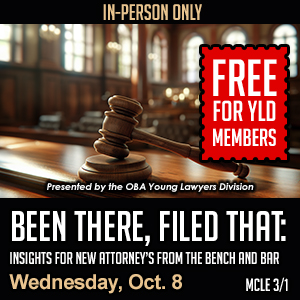
On Wednesday, Oct. 8, at noon, join the OBA Young Lawyers Division at the Oklahoma Bar Center as they present the CLE "Been There, Filed That: Insights for New Attorneys From the Bench and Bar." During this CLE, the following topics will be covered:
- "Streetlight Method to Preparing a Case File" with speaker Bob Wyatt
- "Managing a Multi-County Practice" with speaker Al Hoch
- "Lawyers Helping Lawyers" (1 hour ethics) with speaker Scott B. Goode
- "A View From the Bench" with speaker retired Judge Gary Maxey
The CLE has information applicable to every attorney and is free to OBA YLD members with the code YLD2025 when registering. The event is $115 for non-YLD members. Attendees can earn 3 general MCLE credits and 1 hour of ethics.
Following this event, the YLD invites you to join them at Topgolf in Oklahoma City, located at 13313 Pawnee Dr. Remember, any member in good standing who has been in practice 10 years or fewer is automatically a YLD member!
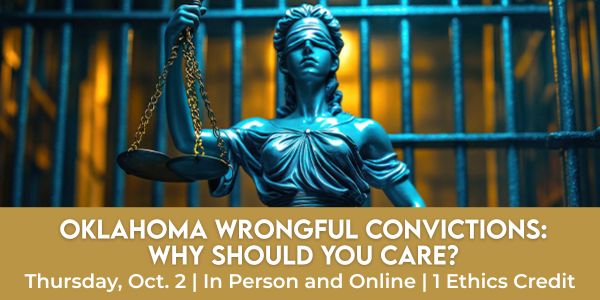
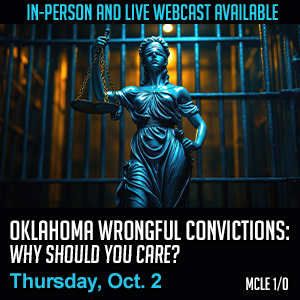
Ensuring fairness and integrity in the justice system is a shared responsibility. This CLE will explore the ethical role of attorneys and citizens in addressing and preventing wrongful convictions in Oklahoma.
The program brings together perspectives from across the justice system. Moderator Jim T. Priest, Oklahoma Innocence Project Advisory Board member, will guide the discussion with:
- Andrea Miller, legal director of the Oklahoma Innocence Project – For the Defense
-
Vicki Behenna, Oklahoma County district attorney – For the State
-
Jim McCloskey, founder of Centurion and co-author (with John Grisham) of Framed – For the Innocents
Join us for this program of practical insights and professional perspectives on a critical issue in our legal system and earn 1 hour of ethics MCLE credit.

Don't miss our featured articles from the September bar journal! This month's journal provides articles on the topic of torts and accessibility, including:
Diagnosing Discovery: A Primer on Discovery in Medical Malpractice Cases
By S. Shea Bracken
"It’s official. You filed a medical malpractice lawsuit and are ready to take on the world. You walk out of the courthouse with your fist triumphantly pumped into the air, just like John Bender in the iconic scene where he walks off the football field during the ending of The Breakfast Club. Unlike in The Breakfast Club, this is not the end."
Is Your Law Firm Compliant With Title III of the Americans With Disabilities Act?
By Angie Barker
"Our profession has a unique responsibility to model compliance with civil rights legislation. But when law firms fail to provide accessible facilities, they create barriers that prevent individuals with disabilities from obtaining legal representation, consulting with attorneys or participating in office-based legal proceedings."

Launching Your Law Practice is a free semiannual workshop for new lawyers, those returning to private practice or those venturing out on their own. The program will teach you how to build a client-centered practice, use AI to boost efficiency, understand malpractice insurance and choose the right tech tools for your practice. Plus, get hands-on practice with trust accounting and start drafting your business plan with guidance from OBA staff.
Email Nickie Day or call 405-416-7050 to register for this workshop.

We want to feature your work on "The Back Page of the Oklahoma Bar Journal! All entries must relate to the practice of law and may include articles, reflections or other insights. Poetry, photography and artwork pertaining to the legal profession are also welcome. Email your submissions of roughly 500 words or high-resolution photos to OBA Communications Director Lori Rasmussen.
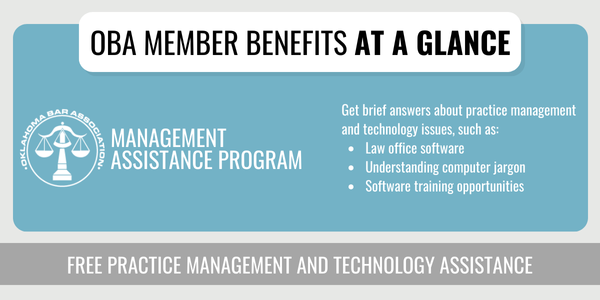
Your OBA membership includes access to practice management and technology assistance. Get answers about technology issues, time management, law office software and more from the OBA Management Assistance Program! Members get free over-the-phone information about technology issues and management, as well as a free 45-minute consultation for those setting up a new practice or in need of a more detailed discussion.
Featured CLE


By OBA Management Assistance Program Director Julie Bays
You may have seen the recent buzz about a local defense brief that reportedly included “hallucinated” cases. This incident highlights that although generative AI can assist lawyers with drafting and research, it cannot replace professional judgment or ethical responsibility.

Under the Oklahoma Rules of Professional Conduct, Rule 1.1, lawyers are required to maintain competence in their legal practice. Specifically, Comment 6 to Rule 1.1 highlights the need for attorneys to understand the benefits and risks associated with relevant technology, including AI. This means lawyers must be familiar not only with how these tools operate but also with their limitations and the potential for errors, such as generating fictitious or misleading case citations. Even trusted legal research platforms like Lexis, CoCounsel or Vincent can sometimes produce hallucinated results or inaccurate quotations. Ultimately, it is the lawyer’s responsibility to identify and correct these errors before anything is filed with the court. Think of it this way: AI is a brilliant but sometimes unreliable intern. You wouldn’t let an intern with a known penchant for making up facts file a brief without a thorough review, would you?
For solo practitioners and small firm lawyers, AI can be a powerful assistant, streamlining research and drafting tasks. However, the key to leveraging these benefits safely is pairing AI-generated output with diligent human oversight. The best practice is clear: Always treat the output from AI tools as a preliminary draft, not as a finished product ready for submission. Double-check all authorities, verify the facts and ensure that every document meets the highest professional standards before it leaves your desk. Let’s face it: You don’t want to be in court explaining that Imaginary v. Made-Up is, in fact, an AI-generated fantasy and not binding precedent!

The Oklahoma Bar Journal is a publication of the Oklahoma Bar Association. All rights reserved. Copyright© 2025 Oklahoma Bar Association. Statements or opinions expressed herein are those of the authors and do not necessarily reflect those of the Oklahoma Bar Association, its officers, Board of Governors, Board of Editors or staff. Although advertising copy is reviewed, no endorsement of any product or service offered by any advertisement is intended or implied by publication. Advertisers are solely responsible for the content of their ads, and the OBA reserves the right to edit or reject any advertising copy for any reason. Legal articles carried in The Oklahoma Bar Journal are selected by the Board of Editors. Information about submissions can be found at www.okbar.org.