
Vol. 6 No. 25 | June 24, 2026


Courts
Supreme Court of Oklahoma
- 2026 OK 51: STATE FARM FIRE & CASUALTY CO. v. PALUMBO et al.
Court of Criminal Appeals
No published opinions this week.
Court of Civil Appeals
- 2026 OK CIV APP 18: SAPULPA v. GANNETT CO. INC.
Dispositions Other than by Published Opinions
The Supreme Court of Oklahoma Court Calendar
The Supreme Court of Oklahoma is in session year round, unless otherwise noted. The court regularly schedules conferences on Mondays and other days as needed.
Member Transitions




More
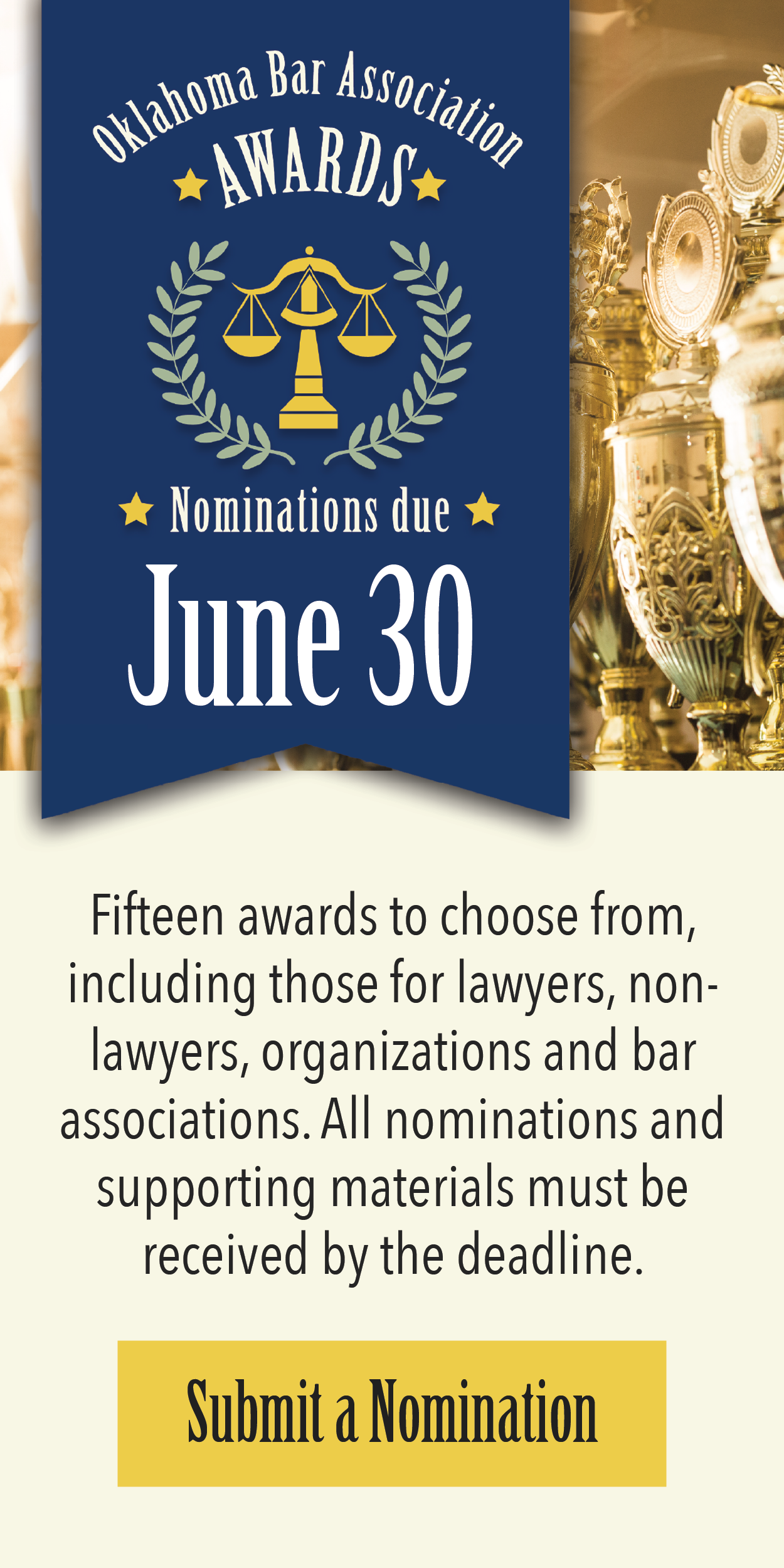
Deadline Approaching! Submit Your OBA Award Nominations by June 30

For decades, the Oklahoma Bar Association has recognized attorneys across the state who demonstrate professionalism, ingenuity and excellence in the legal field with prestigious OBA Awards, many of which are named after trailblazers in the legal field.
If you know an attorney who fits the bill, consider nominating them for an OBA Award! The OBA Awards Committee is now accepting nominations for the 2026 OBA Awards, and this year's honorees will be recognized during the OBA Annual Meeting in November.
Nominations are due by Tuesday, June 30. Nominate a friend or colleague today!
Volunteer Your Legal Expertise To Support America's Heroes
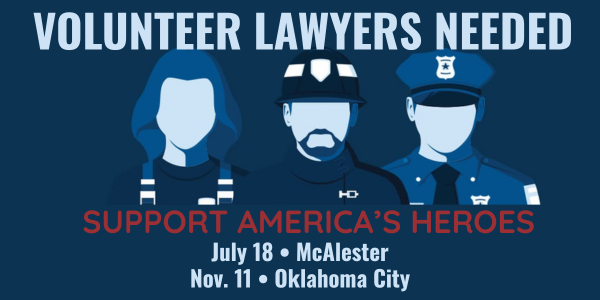
As we prepare to observe America's 250th birthday this July 4, OBA members can celebrate by volunteering to provide pro bono legal services to those who serve our nation and our communities every day. Two upcoming events provide the opportunity to lend your support to these heroes!
Wills for Heroes | July 18 | McAlester
The Wills for Heroes program provides free, basic wills and powers of attorney to Oklahoma law enforcement, emergency personnel, first responders, veterans and servicemembers. The OBA Young Lawyers Division oversees the program. An event is being planned for July 18 in McAlester from 9 a.m. to 12 p.m. Contact Chloe Moyer for more information or to sign up to volunteer.
Heroes Day | Nov. 11 | Oklahoma City
The inaugural Heroes Day event, planned for Veterans Day, Nov. 11, at the Oklahoma Bar Center in Oklahoma City, will offer free, in-person legal assistance for military servicemembers and veterans available from 10 a.m. to 2 p.m. A wide range of legal services will be offered to address the varying needs of those who have honorably served our nation. Lunch will be offered and CLE will be available. Contact Tiffani Armendariz with the Oklahoma Access to Justice Foundation for more information.
OBA To Launch New and Improved Public Website

The OBA will soon launch a new and improved version of the association's public website, www.okbar.org. The new site offers improved search features and will be easier for OBA members and the public to use and navigate. OBA members will be able to view section, committee and governance information, as well as the Oklahoma Bar Journal, classified ads and more. Links to your MyOKBar accounts and MCLE information will remain easily accessible through the new website. More details coming soon!
Scams Targeting Lawyers: Don't Be a Victim

Attorneys are a constant target for scammers. Some of the more recent scams targeting lawyers have included fake electronic filing notifications, counterfeit check scams, deepfake voices, text message scams and more. The OBA Management Assistance Program has put together a list of resources to help you learn how to spot these scams and avoid becoming a victim.
Write for 'The Back Page'
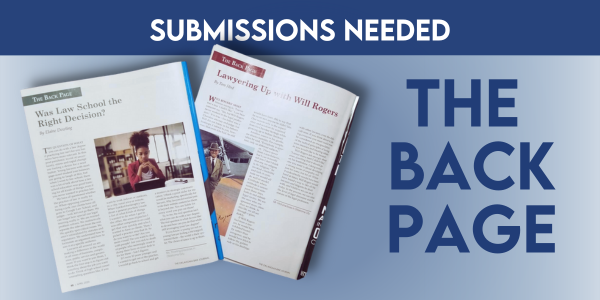
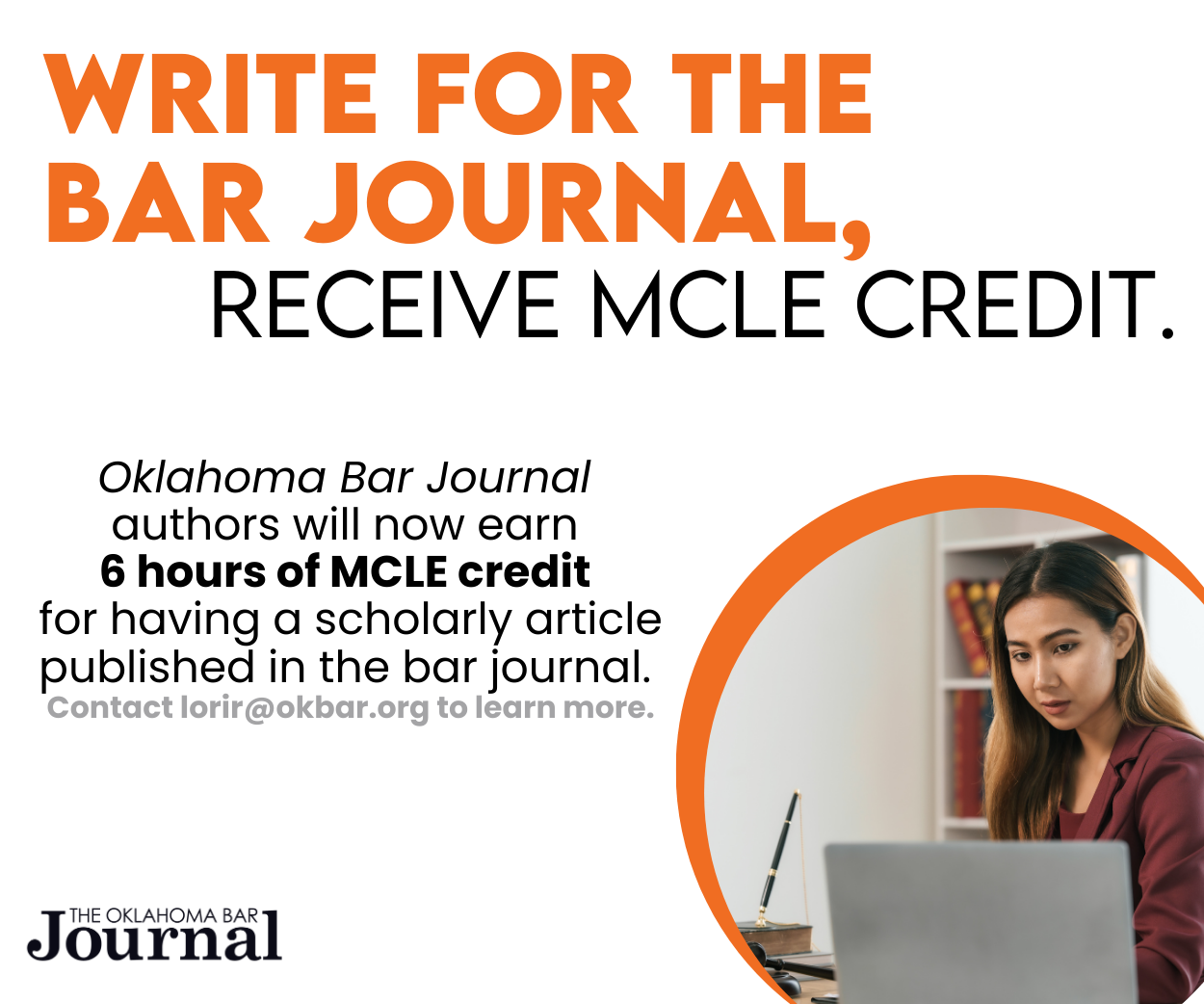
What is “The Back Page"? It is that final word, the final impact, the valuable insight you might want to share with the world. It's meant to convey humor, intrigue and to inspire others. It is intended to be a broad area where Oklahoma attorneys can submit meaningful articles. Short articles that don't fill a particular slot will be considered for publication here. The author will receive a byline. Articles will not be published anonymously.
All entries must relate to the practice of law. These entries may include articles, reflections or other insights. Poetry, photography and artwork connected to the legal profession are also welcome.
Send submissions of approximately 500-600 words to Lori Rasmussen, managing editor. Authors will be notified by email if their piece is selected for publication.

Featured CLE



Develop AI Policies for Your Staff and Firm: Don't Wait Until Something Goes Wrong
By OBA Management Assistance Program Director Julie Bays
 The biggest AI risk for many law offices is not the technology itself. It is using it without clear expectations. Lawyers are already trying AI tools, and in many offices staff members are too. The real question is whether the lawyer has set those expectations before confidential client information, unverified research or client work product gets entered into a tool without proper supervision.
That is why it helps to put the ground rules in writing before problems arise. A written AI policy does not have to be complicated. For many solo and small firm lawyers, a short practical policy is better than a long document no one reads. The goal is to answer the basic questions before someone must guess.
Which AI tools are approved for firm use? What information may never be entered into an AI tool? Who is responsible for reviewing AI-generated work? How will legal citations, quotations and factual statements be verified? May staff use AI tools for client-related work? When should a client be told that AI was used? Who in the firm is responsible for revisiting the policy as the technology changes?
These are management questions as much as technology questions.
One common mistake is assuming that no policy is needed because the lawyer has not formally adopted AI. But lawyers and staff may experiment with free tools because they are convenient, interesting or built into products they already use. That is how confidential information can be copied into the wrong place. It is also how a draft, summary or research result can become part of a client matter without proper review.
Another common mistake is assuming that the AI tool is the problem. Usually, the bigger issue is workflow. If a lawyer uses AI to summarize a document, who checks the summary? If a staff member uses AI to draft a client email, who reviews it before it is sent? If a lawyer uses AI to assist with research, how are the authorities verified? If the firm uses a paid legal AI product, who understands the limits of that product and the terms governing data use?
A basic AI policy should include at least these points:
- Approved tools: Identify which tools may be used for firm work and which tools are prohibited.
- Confidentiality limits: State clearly that confidential client information, personally identifying information, privileged communications and sensitive documents should not be entered into any unapproved AI tool.
- Human review: Require lawyer review of any AI-assisted work before it is used in a client matter, sent to a client or filed with a court.
- Verification: Require independent verification of citations, quotations, legal rules, deadlines, calculations and factual summaries.
- Staff use: Explain whether and how staff may use AI tools, and who supervises that use.
- Client communication: Identify situations where client disclosure or consent may be appropriate.
- Updates: Set a reminder to review the policy regularly because the tools, risks and court expectations are changing quickly.
This is not about discouraging innovation. AI tools can be useful when lawyers understand their limitations and build appropriate safeguards. But technology competence includes understanding both the benefits and risks associated with relevant technology. A simple written policy helps lawyers protect client information, supervise work, verify accuracy and improve the quality of legal services.
Oklahoma lawyers also have an explicit ethics reference point for this issue. Comment 6 to ORPC 1.1 provides that, “to maintain the requisite knowledge and skill, a lawyer should keep abreast of changes in the law and its practice, engage in continuing study and education, and comply with continuing legal education requirements, including the benefits and risks associated with relevant technology.” That language supports the practical point here: lawyers do not need to become technologists, but they do need to understand enough about the tools they use to protect client information, supervise staff and verify AI-assisted work.
For lawyers looking for additional policy ideas, Catherine Sanders Reach outlined a practical guardrails approach that addresses risks such as shadow AI, embedded-AI tools and the need for approved workflows rather than unrealistic blanket prohibitions. She also has a list of other types of AI policies at the end of her article, "Beyond the Ban: Why Your Law Firm Needs a Realistic AI Policy in 2026."
Do not wait for a mistake, a client concern or a court order to decide how AI may be used in your office. Decide now, write it down and train everyone who works with you.
The Oklahoma Bar Journal is a publication of the Oklahoma Bar Association. All rights reserved. Copyright© 2026 Oklahoma Bar Association. Statements or opinions expressed herein are those of the authors and do not necessarily reflect those of the Oklahoma Bar Association, its officers, Board of Governors, Board of Editors or staff. Although advertising copy is reviewed, no endorsement of any product or service offered by any advertisement is intended or implied by publication. Advertisers are solely responsible for the content of their ads, and the OBA reserves the right to edit or reject any advertising copy for any reason. Legal articles carried in the Oklahoma Bar Journal are selected by the Board of Editors. Information about submissions can be found at www.okbar.org.